Rotator cuff tendinopathy and shoulder tendon conditions — non-surgical care
Rotator cuff tendinopathy, supraspinatus tendinosis, and other shoulder tendon conditions can now be treated without surgery using TenJet® percutaneous tenotomy. Atlanta specialists are available now.
Find an Atlanta Specialist Learn About TenJet®Patient Story
TenJet treats chronic tendon degeneration in the shoulder among other sites. This patient describes their own procedure and recovery.
TenJet Patient Testimonial
Video courtesy of HydroCision, Inc., the maker of TenJet®. Individual results vary; this patient's experience is not a guarantee of outcome. Talk with a specialist about whether the procedure is appropriate for you.
Shoulder pain from tendon degeneration is one of the most treatable conditions in musculoskeletal medicine when properly diagnosed and addressed at the tissue level.
Degeneration of the supraspinatus, infraspinatus, teres minor, or subscapularis tendons without full tear. Causes aching pain with overhead activity.
Focal degeneration within the supraspinatus tendon — the most commonly affected rotator cuff tendon. Often visible on ultrasound or MRI.
Degeneration of the long head of the biceps tendon at the shoulder. Causes anterior shoulder pain and tenderness along the bicipital groove.
Calcium deposits within the rotator cuff causing acute or chronic shoulder pain. Responds well to ultrasound-guided interventional procedures.
TenJet® by HydroCision delivers a precise, high-pressure saline stream to remove degenerated tendon tissue while preserving healthy surrounding fibers. For shoulder tendinopathy, the procedure targets the damaged portion of the rotator cuff or biceps tendon under real-time ultrasound guidance.
Official TenJet® information: hydrocision.com/product/tenjet/
Official demonstration video from HydroCision, the maker of TenJet, plus a look at how tendinitis differs from the deeper tissue degeneration TenJet is designed to treat.
TenJet Shoulder Minimally Invasive Tenotomy


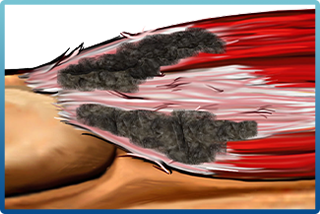
Diagrams and video courtesy of HydroCision, Inc.
Common Questions
It treats chronic tendon degeneration in the cuff, including calcific tendinosis. A large full-thickness tear is a different problem that may require surgical repair instead.
Night pain is characteristic of rotator cuff tendon problems, since lying down loads the tendon differently and removes the daytime distractions that mask it.
Progressively. In one published rotator cuff case the patient wore a sling for two days, began pendulum exercises after that, and returned to sport at around three months.
No. Local anesthetic is administered to the tendon and the procedure is performed with you awake, in an outpatient setting rather than an operating room.
This information is general and is not medical advice. Whether any procedure is appropriate for you can only be determined by a physician who has examined you and reviewed your imaging.